
Dark Ember Creations: Brand, Website & Go-to-Market Strategy
A six-week engagement building brand foundations & a go-to-market strategy to get one woodworker ready for his first public market, and everything that sustains it after.

Twenty years of culinary experience shifted into a passion for woodworking.
Daniel Cohen started his career in the heat of the kitchen for some of the top restaurants in NYC, and now makes heirloom-quality wood pieces of art. That shift didn't happen overnight, and the dream to focus his energy on his craft was the igniting decision. He came to me with a goal and an opportunity to make it real. Six weeks before his first public market, he had the work and the drive, but no brand, website, or plan for turning one day at a table into something that lasted. I came in to help build all three.
The goal wasn't just a successful market day, it was making sure that day turned into something that lasted.
Daniel didn't need all the bells and whistles. He needed a reason for people to remember him after a two-minute conversation at a market table, and a way to find him again once they walked away. Without a real brand story and a plan behind it, a first market is just one day that doesn't lead anywhere afterward. This project excited me because that gap was solvable, and because a brand built intentionally from the outset would outlast the event by months, not just the afternoon.
- 01
Built the full brand system before a single flyer existed: a name, values, and story that would carry past one event, not just a banner for the day.
- 02
Chose a name and story pulled from Daniel's real history: the kitchen years, his mother's initials, not a persona built just for the market.
- 03
Held the product lineup to six core categories on purpose, even with pressure to show everything he could make.
My role was strategy and direction throughout. The making, selling, and running the table stayed with Daniel.
The people behind the work, and those it was built for.
A brand doesn't happen alone. Here's who was actually in the room for this one, and who it was ultimately built to reach.
Behind the work
Who it's for
First, we started with who he wanted to be a part of the community he'd build. Then, we considered the specific audience of the market day crowd.
Six weeks of moments, one decision at a time.
Every decision is important and worth a moment to consider. Here's what actually happened, phase by phase; the thinking, then the work it produced.
Listen
It started with understanding who Daniel is, what he makes, and why; before a single design decision was made.



- Ran a discovery exercise: who he is, what he makes, why, and the emotions the brand should invoke
- Worked through visual exercises: color, name-feel, and personal elements that felt true to him, not a persona
- Researched trademark, domain, and handle availability before locking anything in
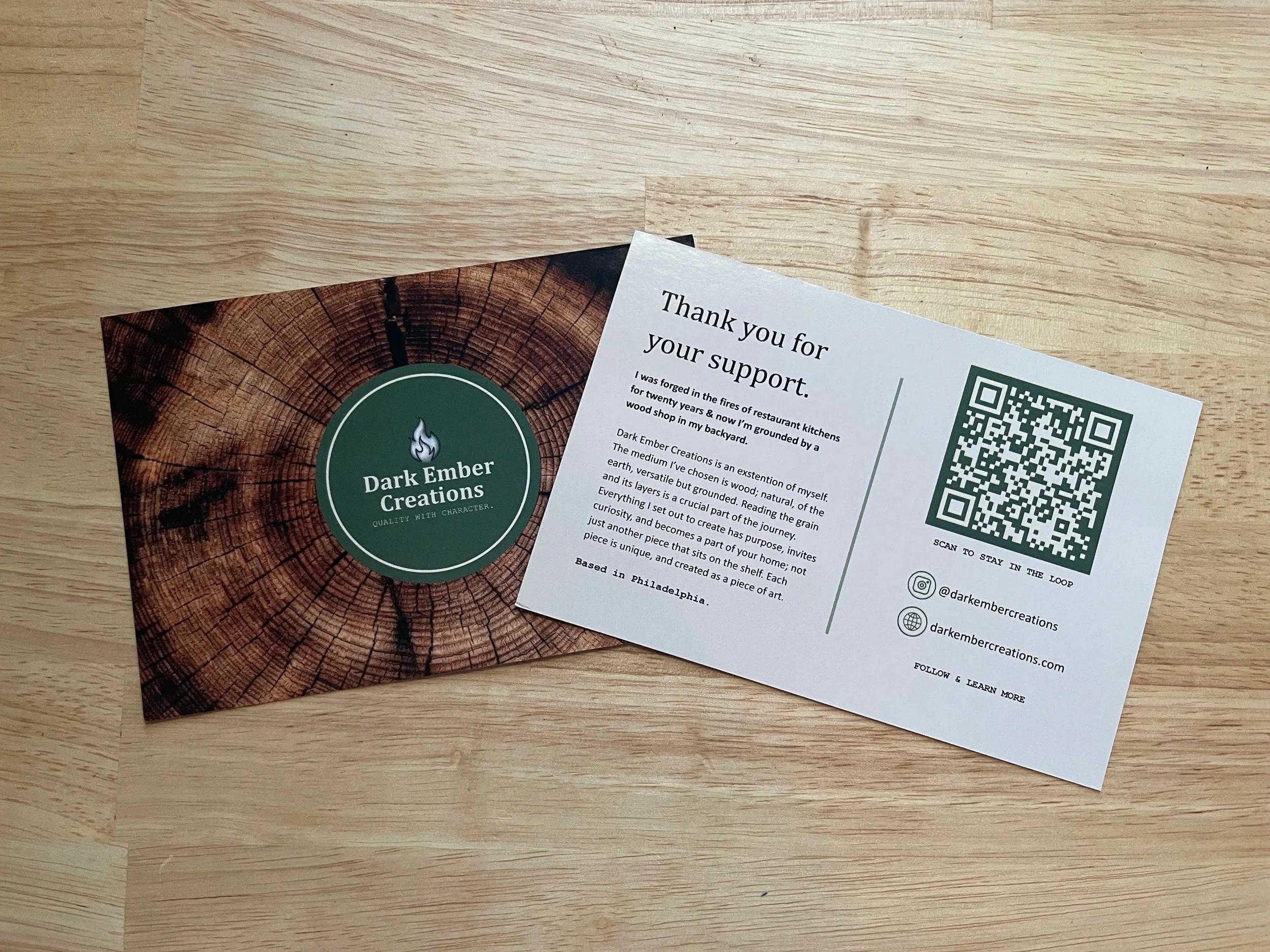
- Landed on "Dark Ember Creations": DEC echoes his mother's initials, "ember" nods to 20 years as a chef, "creations" leaves room to grow into new work
- Built a brand foundations deck after running a scenario-based "stress test" to validate all the brand elements before committing
Design
Turning the brand into a real plan for market day, complete with research trips and the words the website needed to say.
- Mapped the 6-week go-to-market plan: business admin (insurance, sales tax license, POS), inventory schedule, marketing items needed
- Led field-trip sessions: visiting comparable maker markets together to study what worked
- Wrote full website copy: home, about, values, gallery, custom orders
- Built in collaboration with LOCAL: I led brand direction and copy; they handled the build.
Build
Direction and strategy for everything that would sit on, or around, the table.
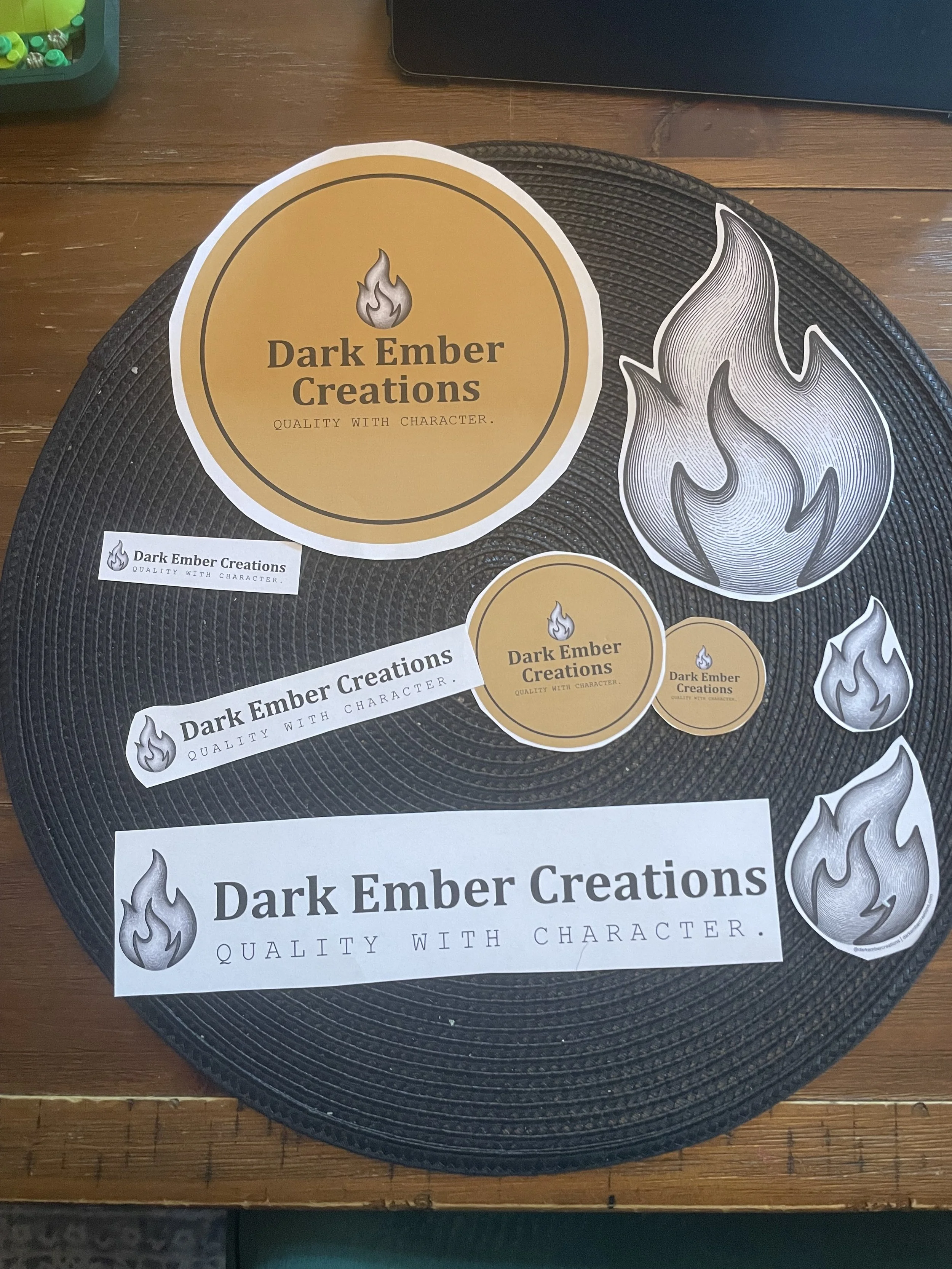
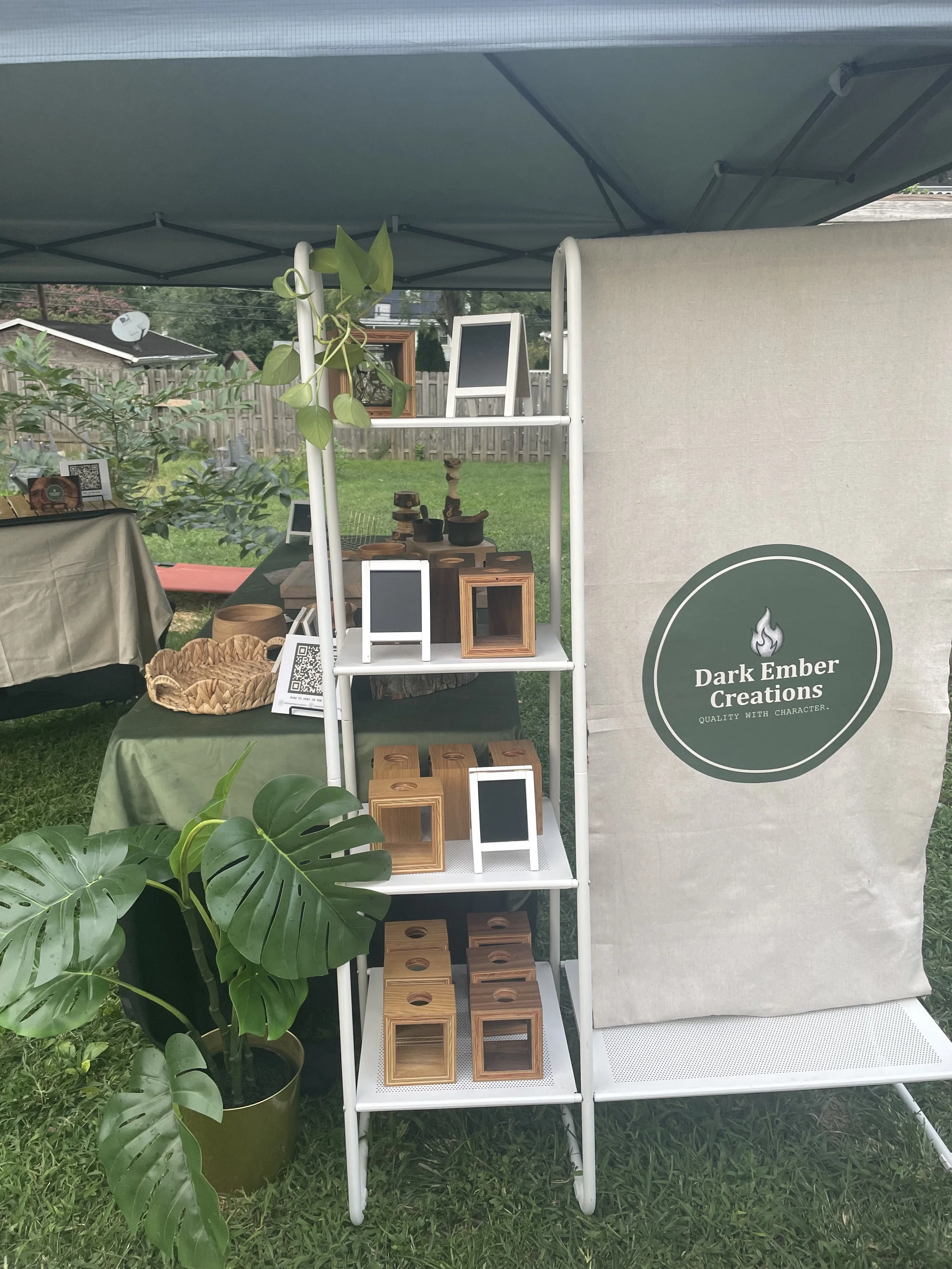
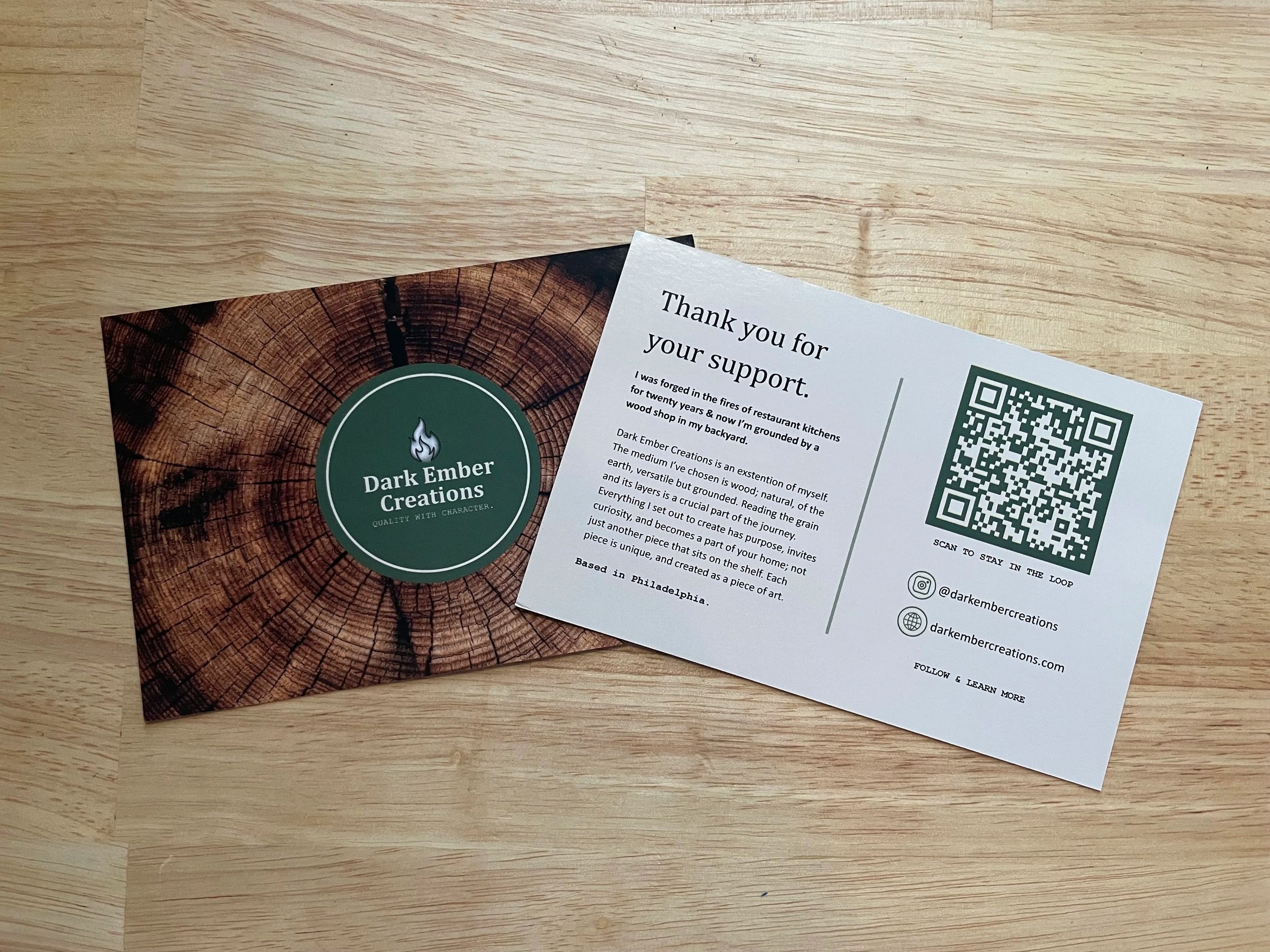
- Directed merch, signage, and flyer concepts: story, socials, and a QR code to the newsletter signup
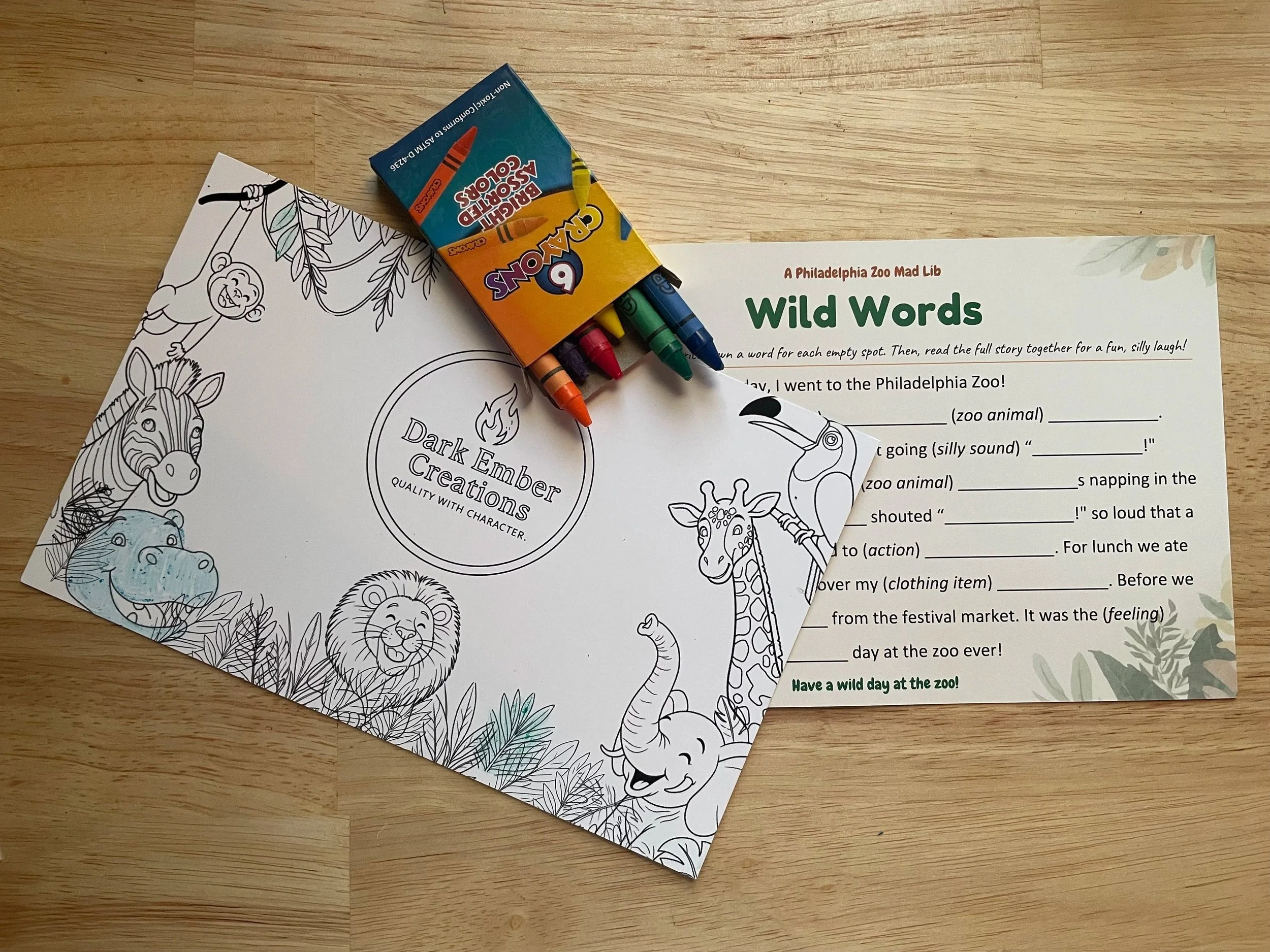
- Proposed a kids' activity flyer as a booth-traffic driver, then sourced it for print
- Recommended behind-the-scenes/process content for social: strategy and feedback only, not creation or posting
- Making the physical pieces stayed with Daniel; direction and strategy were where I brought value
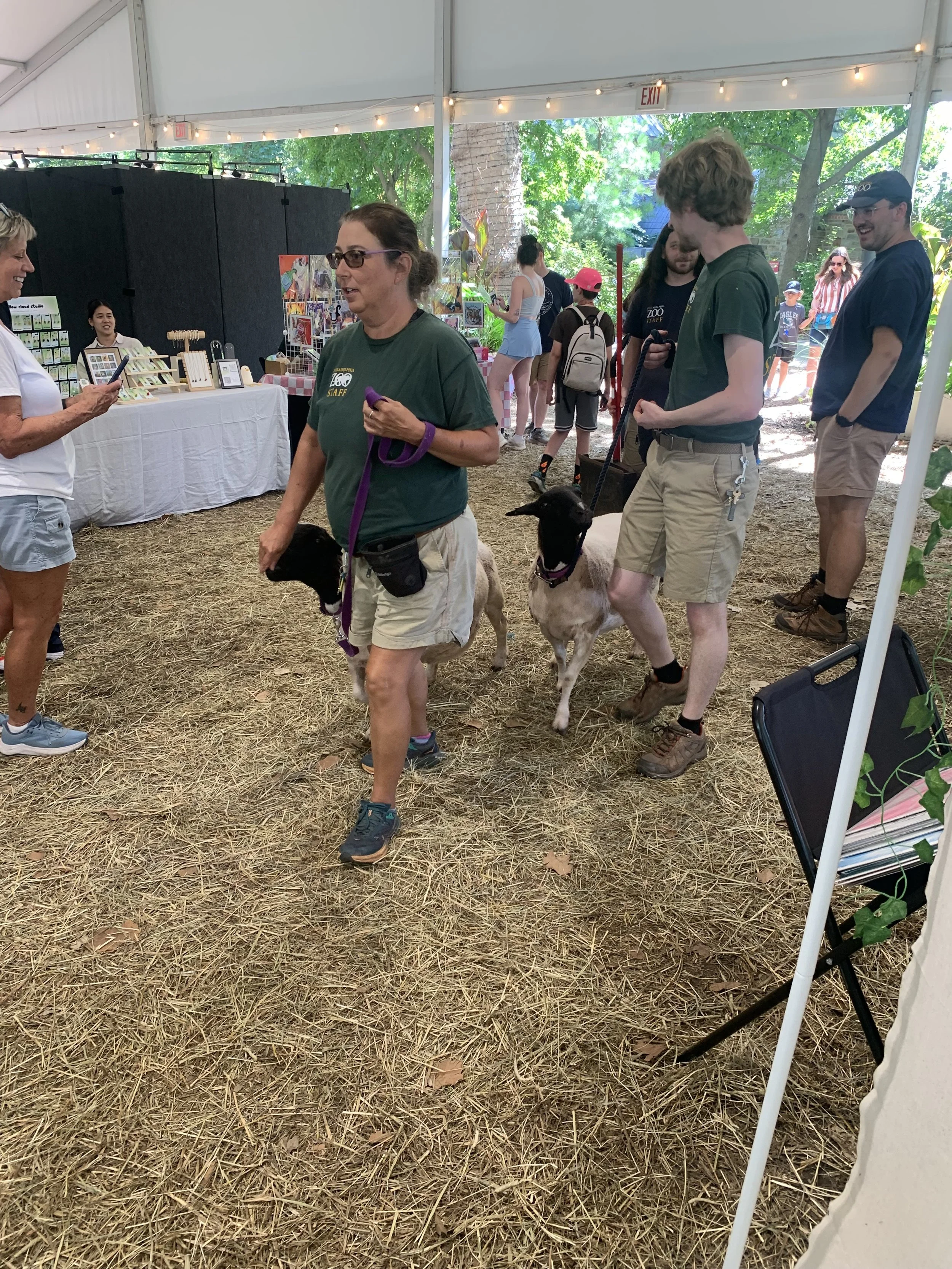
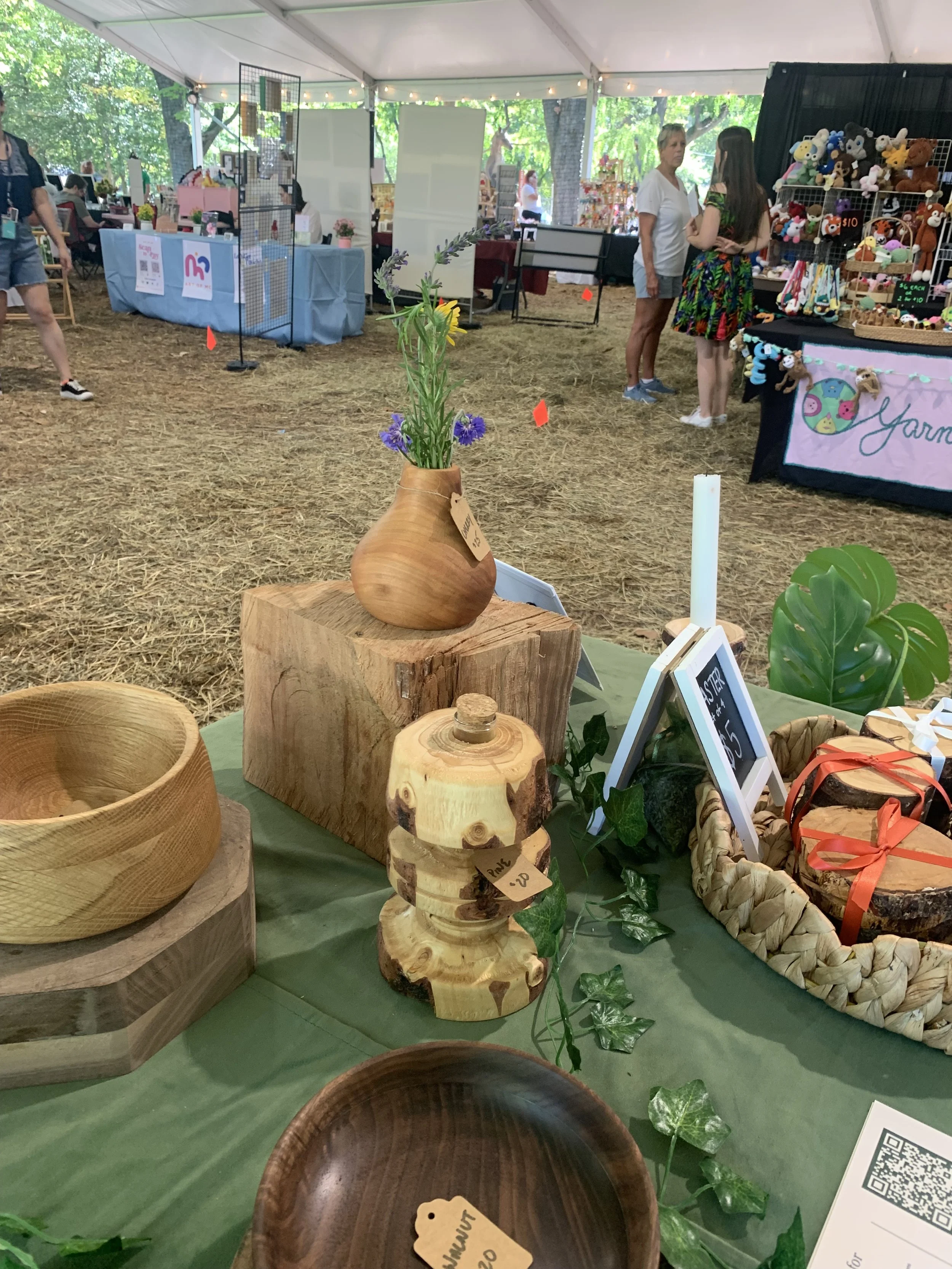
August 29th. 30 hand-picked vendors at the Philadelphia Zoo Art Festival.
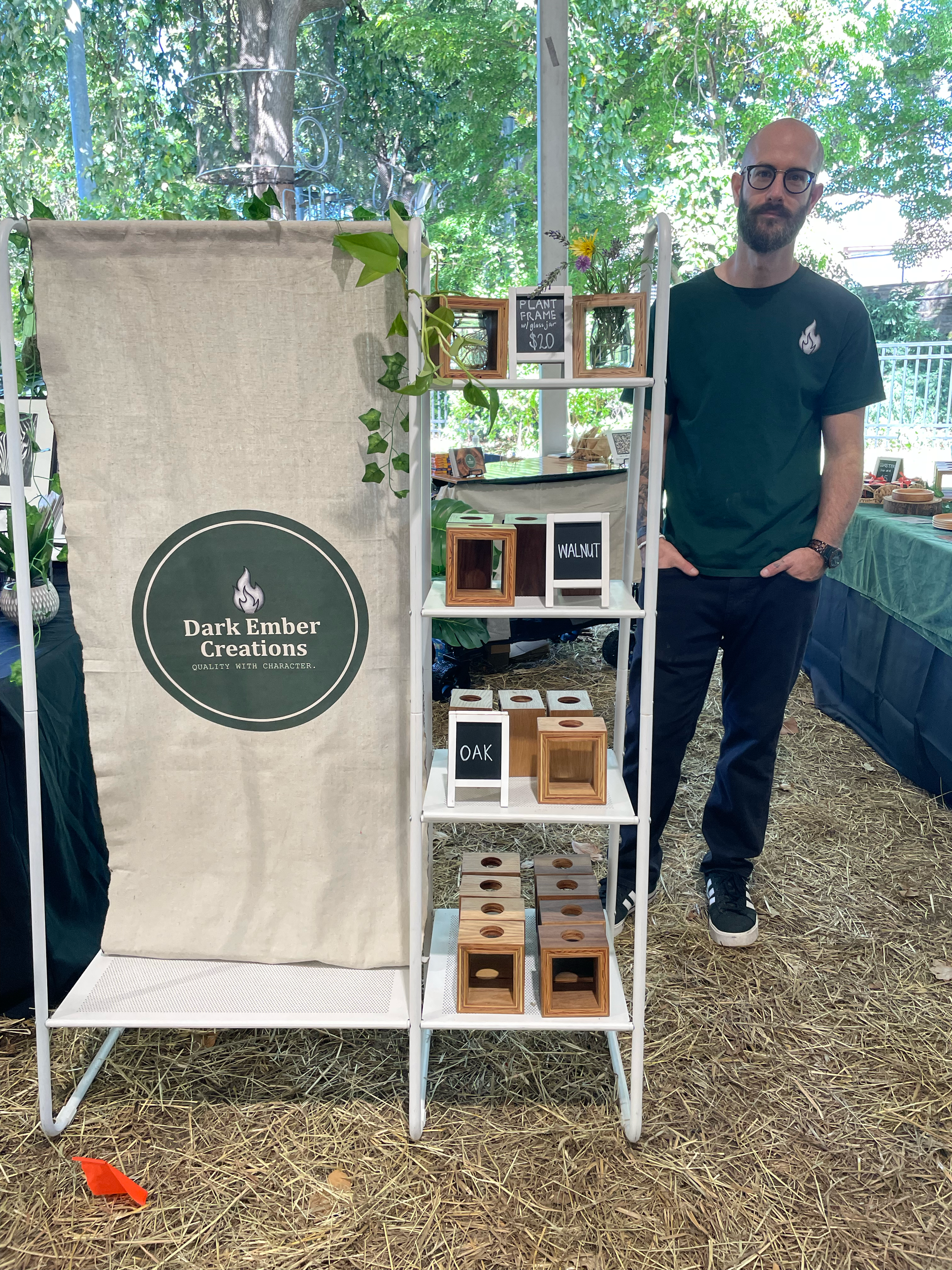
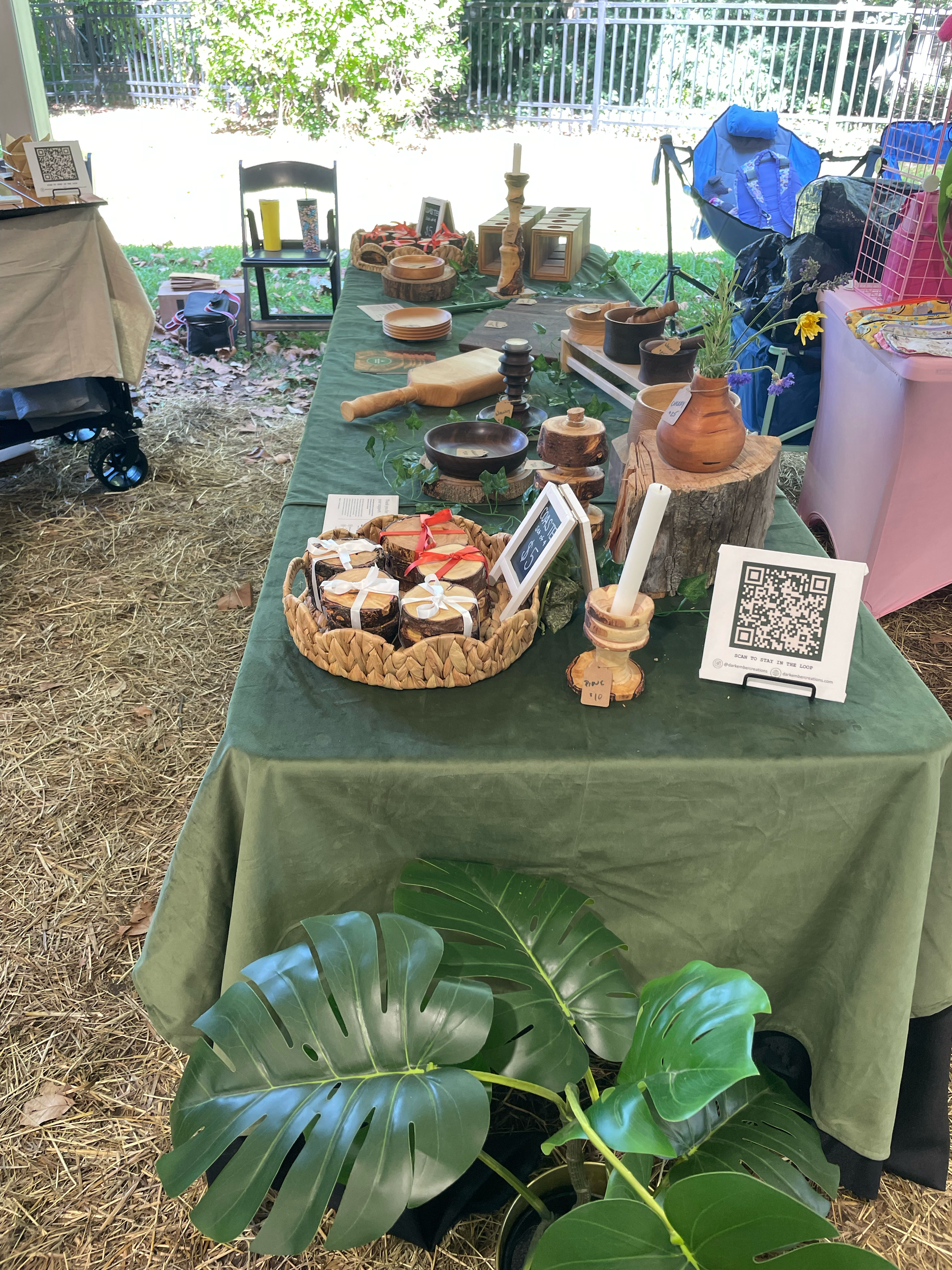
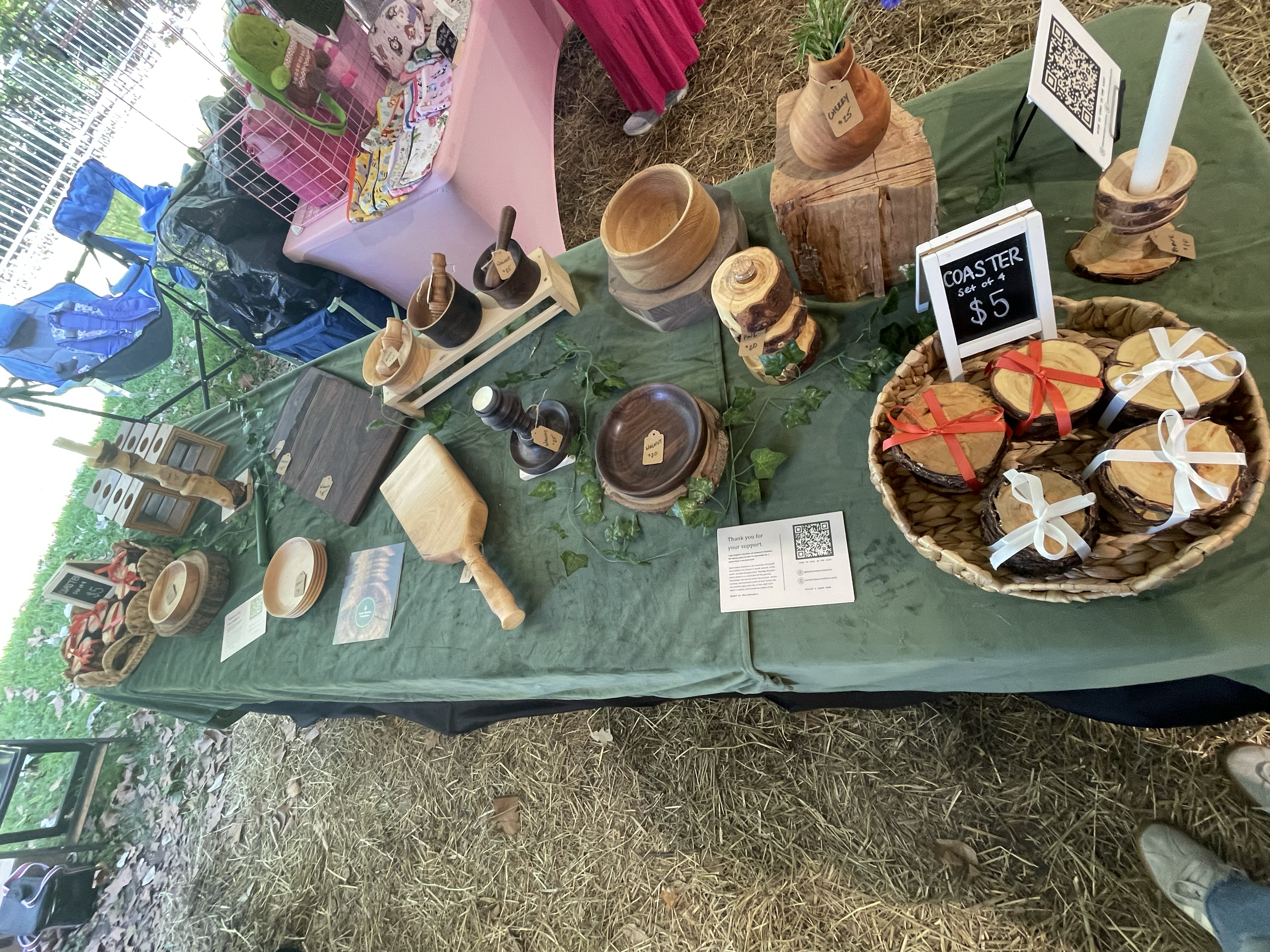
Booth setup took under 30 minutes; planning the load-in order ahead of time meant there was time left over to walk the market and meet other vendors before doors opened. Daniel landed a mid-row spot, third from the end; the organizer had three woodworkers apply, and picked him as the one to accept. The one curveball: an 8-foot table showed up instead of the planned 6-foot, in a space just under 10x10, and the display got rebuilt on the fly.
- Storytelling sold the work: pieces built from personal history (a family Christmas tree, salvaged wedding wood, trees from his own backyard) resonated more than the pieces themselves.
- The kids' activity flyers were the real standout: no QR code, no website, just the logo, and they still pulled in families who weren't otherwise stopping, gave a natural way to start a conversation with parents, and turned some of those conversations into sales.
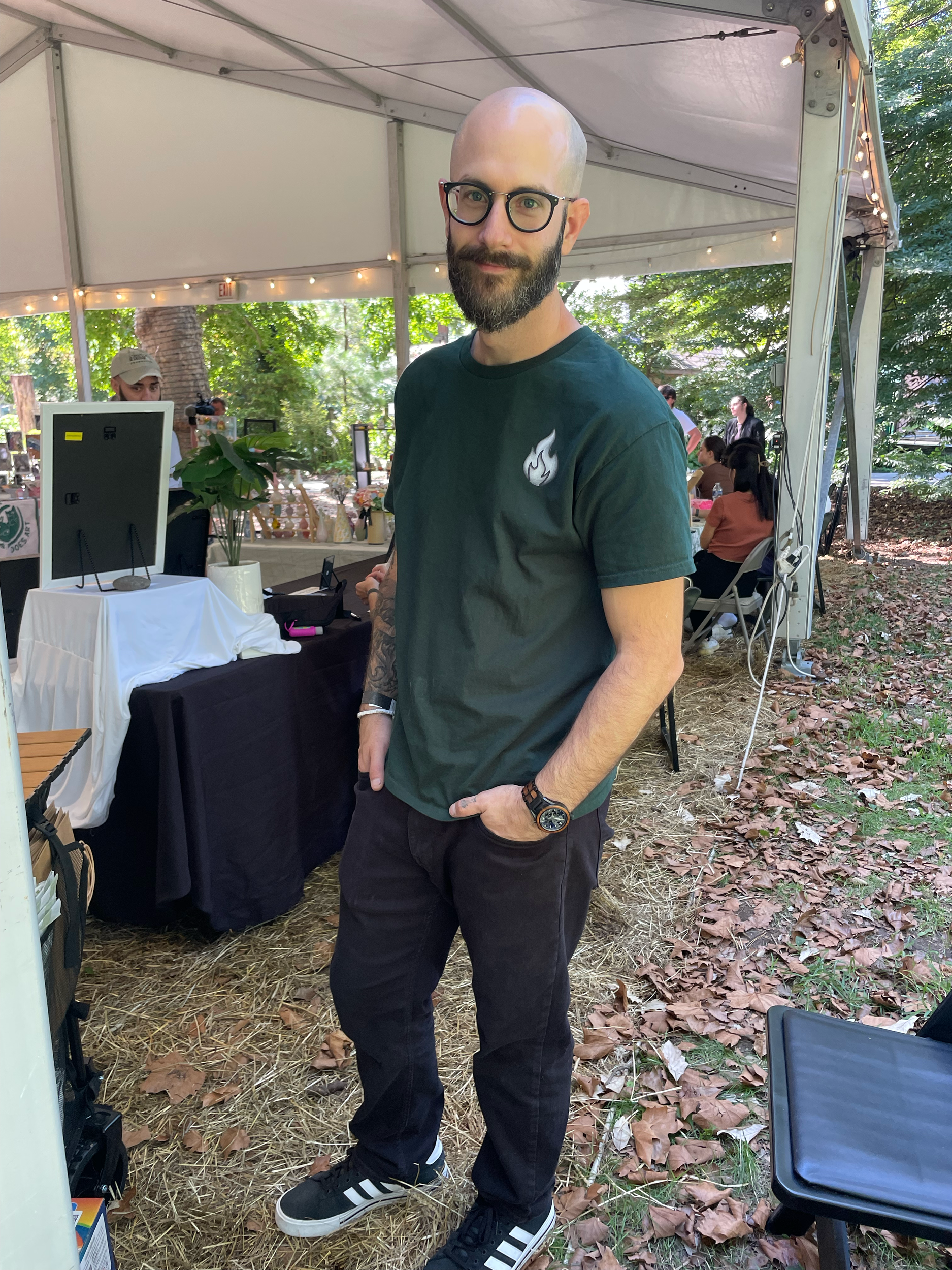
- Signage and the branded t-shirts were both visible from a distance and pulled people in.
- Offering to photograph parents with their kids, not just the kids, built goodwill and kept people at the booth longer.
- Confirm booth dimensions ahead of time, or bring modular display pieces built to adjust on the fly.
- Read the crowd before stocking the table: this market skewed heavily toward families and kids, and beyond the free activity table, there was nothing actually for sale in that range.
- About $300 in sales; roughly 25% of the inventory brought sold, and 20 to 30% of the initial setup and booth costs got recouped.
- More than the numbers, the day validated two things: this can be a real income stream, and there's real demand for an online store.
- Inquiries for online and custom orders started coming in before the tables were even packed up.
Customers didn't just compliment the work, they were surprised by it; more than one mentioned getting more than they expected for the price.
"Chantelle thought of things I might not have thought as important: dual tablecloths, tissue paper and boxes for packaging, mad libs and coloring sheets for the kids. Without the brand foundations behind me, I would've walked in so bare and empty. She let me focus on my art while she figured out how to draw people to it and helped give me the language to tell my story; that's exactly where a lot of artists get stuck, buried in marketing instead of making the work."
Have a goal like this or want a story built for your brand?
If you’re heading into your own “first market” moment (literal or otherwise), let’s talk about what you actually need to walk in ready.
This case study shows the general shape of engagement when we work together: discovery, planning, direction, and a retrospective built for what comes next. Every client’s version looks different.